

As Ontario Skateboarding enters its fifth year, the organization is "switching up the board" to better serve a scene that remains fiercely independent, yet ready for the next level.
In this sit-down with Misprint, Ontario Skateboarding breaks down the addition of new community leaders, the challenge of balancing advocacy with skate culture’s innate freedom, and why the goal is to build a self-made future that never sells out. From supporting local DIYs to establishing pathways for the next generation of talent, here is the roadmap for keeping Ontario’s skate community hardcore, unified, and evolving on its own terms.
“Our mission is to grow and strengthen the skateboarding community in Ontario by providing a platform for skaters to showcase their skills, stay informed about events, and access top-quality gear. We believe in inclusivity, creativity, and the power of skateboarding to bring people together.”
MP: Alright, Ontario Skateboarding just switched up the board. New faces, new energy. What’s the deal—what changed and why now?
OS: 2026 is the 5th year for the organization. It is apparent to me that we need to build on what we’ve established. The original board had Art, Digital Media, Women’s and Indigenous representation, but as the Operational Lead, I couldn’t do everything that needed to be done to support the community. Advocacy and Competition are clearly important components of today’s skate scene that I haven’t been able to support as much as I’ve needed to. Now I’ve got 2 committed homies in place to help develop those chairs. They are huge assets and the board recognized and supported my decision to expand.
MP: Was the goal bringing in more lifers, organizers, people who’ve been doing the work forever—or was it more about leveling things up behind the scenes?
OS: Kevin Page and Scott Loyst are proven community leaders and have basically been doing this work without an affiliation to OS. so it was really an easy decision to provide the opportunity for them to continue it under our flag to show the community that we recognize their importance in the community. Now we can utilize their experience and perspective to serve the whole community in a more defined role. By doing this we level up and bring new personalities and ideas into the mix to help the organization grow.
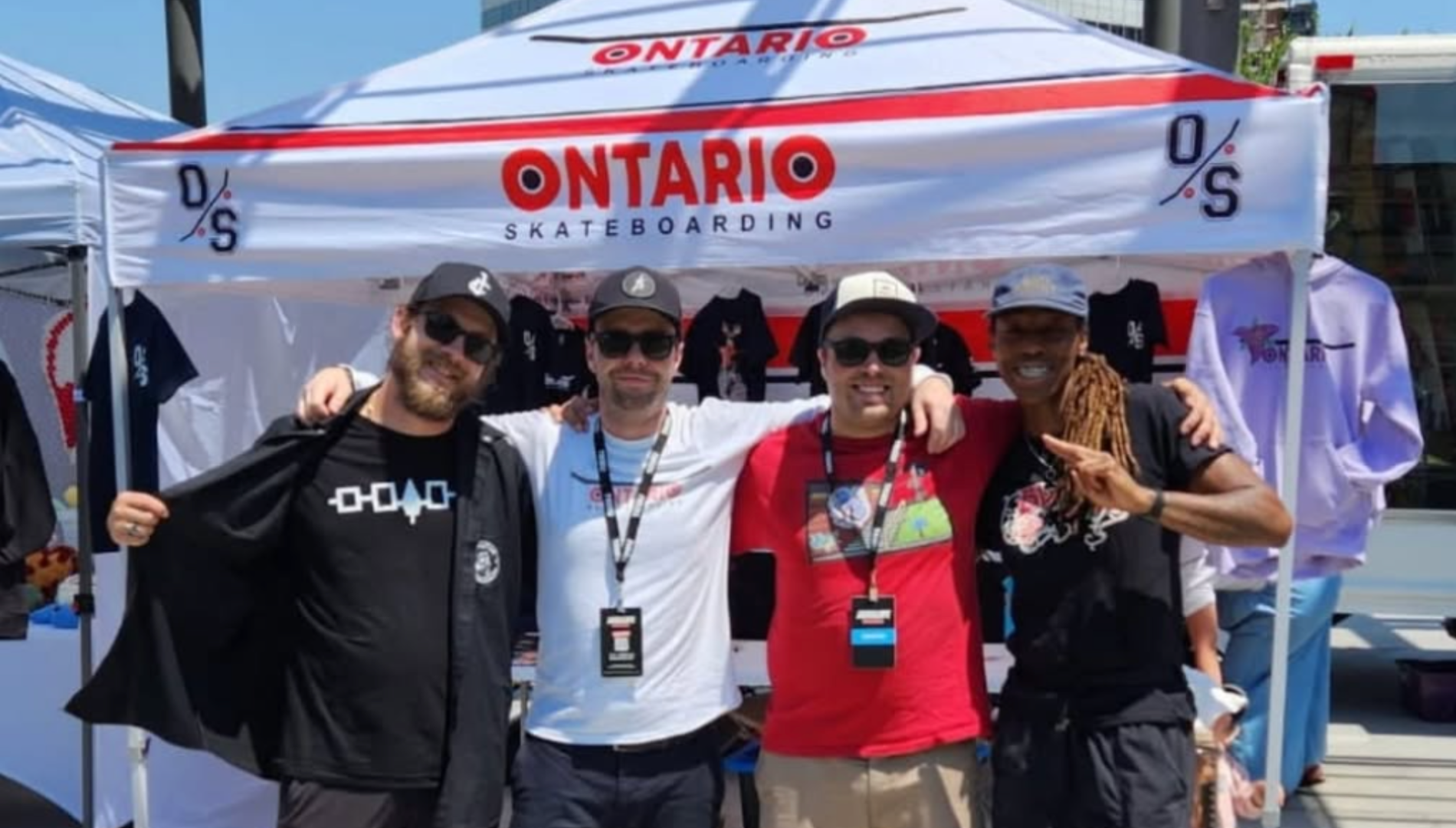
Ontario Skateboarding Board of Directors, L-R: Will Mackie, Indigenous Chair; Alex Sauret, Digital Media; Mike T-Shirt, Executive Director; Sasha Senior, Women’s Chair.
MP: A lot of skaters hear “Board of Directors” and immediately tune out. How does this actually help skaters pushing around right now and not just people sitting in meetings?
OS: Board of Directors isn’t supposed to be something that the community gets excited about at the street level. The organization should serve to instill confidence in the community that we take this seriously. We take this culture seriously and we don’t want corporate or government influence to negatively impact what we all love about skateboarding. We are all drawn to this culture because it isn’t overly regulated. The board in place reflects that fact and we will continue to build on it.
MP: Skateboarding’s never really loved rule or structure. How do you set things up without killing the freedom that makes skating what it is?
OS: I don’t want everything to be sanctioned. I don’t want there to be government oversight because that suffocates some of the innate risk and creativity of skating. Although, I am also aware of risk as it comes to getting sued. I can’t risk my family or my personal reputation because that would be unwise. I think that waivers and transferring the risk onto the skater at the same time as supporting them if they do need rehab from injury or mentorship or resources that the organization can provide that service. To me that’s how it needs to be done. Be hardcore, but know the risk and we got you if you need it.
MP: And how do you keep the board tapped into real scenes—street spots, DIYs, local crews—instead of becoming disconnected from what’s actually happening?
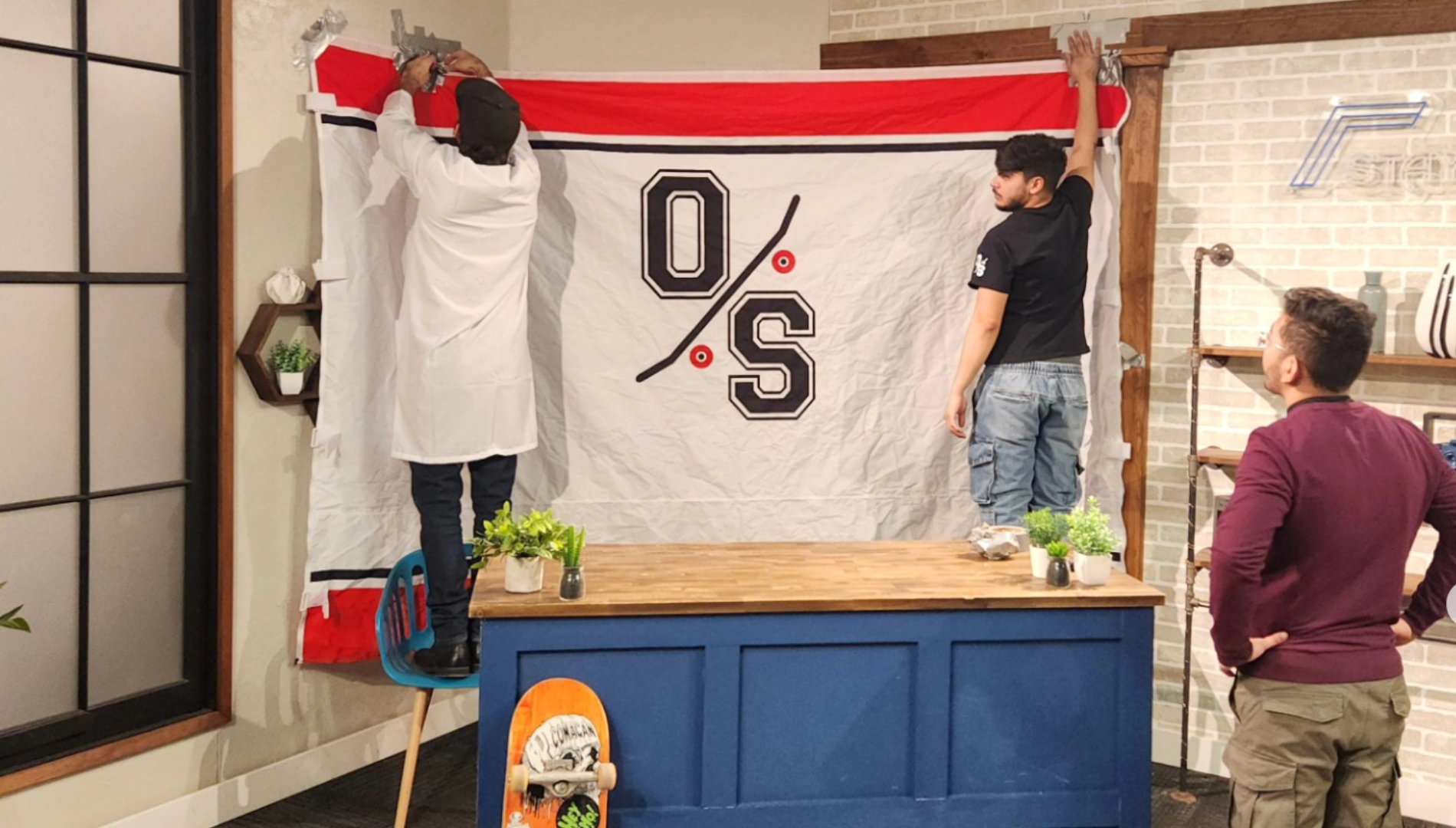
Co-Op students at Conestoga College hard at work. Three students at the college’s School of Creative Industries completed a placement at OS in 2025.
OS: I don’t want to gatekeep, but the existing board is designed to support and work within the existing local and regional scenes. I want to have relationships with all the shop owners, associations and brands because they drive the scene at the street level. I have tried really hard to speak to the skaters themselves so that they know that we genuinely want their input. Regardless of what Chair is needing the most attention, whether it’s Women, Indigenous, Competitive, or general advocacy. The skaters past and present need to provide the real perspective so that they can help navigate where the resources are being directed to accomplish the objective of making things better in all areas for all skaters. In my eyes, that’s the only way to proceed with a community-led initiative.
Where is Ontario’s Scene At Right Now?
MP: Big picture—if someone asked you where skateboarding in Ontario is at right now, what would you tell them?
OS: I think we are stable. I think we have enough youth engagement to make sure that there is a next generation. I also think we have a great bunch of teens and twenty somethings in the prime of their lives skating at a really high level. I don’t think they have enough opportunity to break out though. I hope my work with Canada Skateboard and larger brands can help establish pathways for these skaters to break out whether it’s through the national program or whether it’s through brand sponsorship.
I also think there are a lot of dedicated people giving a lot of their time to the community for no other reason than they love it. Just like what Mispr!nt is doing. It’s worth doing so we do it.
MP: What feels healthy? What feels like it’s popping off?
OS: There’s some really talented girls around 10-15 being led by Fay Ebert who are going to be a force on a much bigger stage than before. That’s the one area where I can see Ontario and Canada really making an impact. The boys in that age group are also really talented, but I can see it in some of the challenges OS puts on that there is something special there.
MP: And where are things still a mess? Be honest.
OS: I think there needs to be a lot of work on the national program for the core skaters of today. There are many super talented skaters between the ages of 19-32 that just aren’t getting the opportunity to develop or gain the exposure that they’ll need to follow their dreams. That’s not what we want to see. We need a real support system that identifies the talent and provides mentorship and opportunity. If you don’t have that it’ll take a lot longer for the dedicated ones to be recognized or they’ll give up before they reach their goals. Either way, it isn’t enough. Money is a big part of it, but there’s also an organizational problem, which is where we’re at right now. None of us get paid for the work we do. We do it because it needs to be done.
MP: Do you feel like Ontario’s still getting slept on, or are people finally starting to pay attention?
OS: Big picture stuff, Ontario and Toronto specifically is getting recognition by the spots that we have and the skaters we’ve produced. Justin Behan is doing a great job of putting that out there with his channels. Bunt also brings in a lot of attention. Ontario doesn’t have a Dime, so we need to just keep building the community level stuff and elevate our own brands and events. Over time I think we’ll break out.
MP: With Toronto getting some love from TJ Rogers, Ben Patterson dropping TO based vids and can’t forget Bobby De Keyser’s BOBCBC when looking from outside the province, do people even really understand what’s going on here—or is it still overlooked?
OS: Keep pushing and dropping gems until the larger brands bring the support. Grow within and don’t depend on anyone else so when it does break out, we can level up on a much bigger scale and show the rest of Canada and the world that Ontario skaters are self driven and self made and won’t be denied.

MP: When brands want to “support skateboarding,” what does that actually need to look like so it doesn’t feel commercial or forced?
OS: I hope that any corporate sponsorship that comes skateboarding’s way is mutually beneficial and the right fit. Personally, I don’t love the dependence on energy drinks and all that. I think there’s a much bigger pool out there of potential corporate sponsors that can align with a rebrand of what modern skateboarding is today. Whoever wants to sponsor skateboarding should do it because they can see the value in the kind of people that make up the skate community. Skateboarders are eclectic, so should the sponsors.
MP: Where does Ontario Skateboarding step in so locals don’t get burned in those situations?
OS: The next few years will determine how much momentum we can drum up for resource spending. I definitely want OS to be able to allocate money across the province to help every regional community have access to the things they need whether it be product, skateparks (indoor/outdoor), events, professional services and mentorship/development. If the local communities have the right people in place and OS is able to help supplement their own goals by getting the right sponsors then hopefully, we can sustainably build a community led program that actually supports the specific needs of each regional community. It is slowly being built now, but we have a long way to go still before it becomes the intended program.
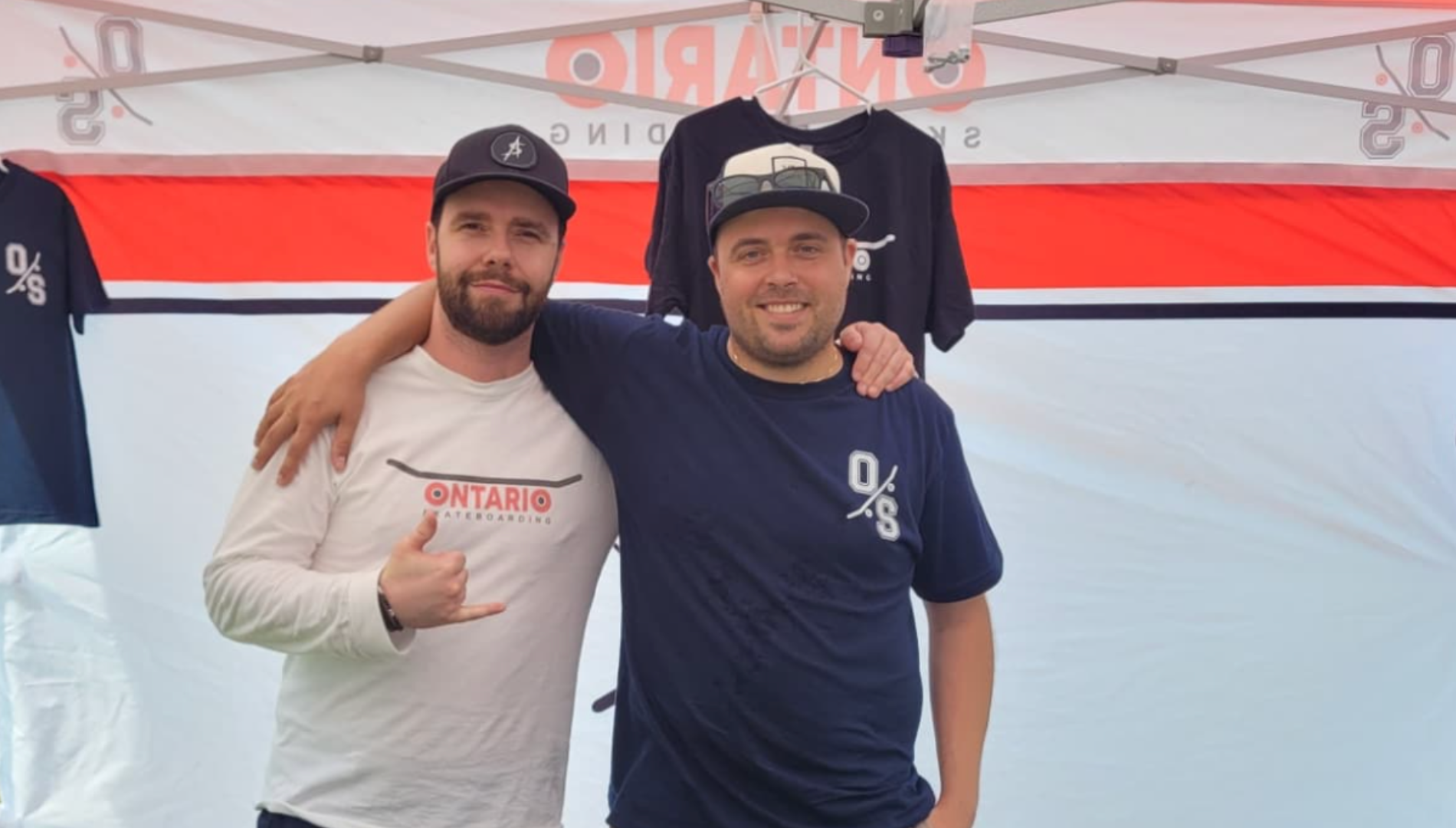
Alex Sauret & Mike T-Shirt in 2025.
Holding the Whole Thing Together
MP: Beyond skaters, how important are shops, local brands, filmmakers, event heads, park builders—all the people holding it down?
OS: Without the shops, brands, filmmakers, Zines, etc there’d be no real progression or community. We need to have more of that and the community needs to support it rather than buying things from the US or any of that. We need to elevate our shops and brands so that the skaters feel that they are getting what they need from within and don’t need to move to BC or Cali or wherever to get those opportunities. I think we have so much talent on the production side with filmers that work with the skaters that we are able to produce great local content documenting the regional crews skating local spots and showcasing our own style. Then the shops and community promote and support the release of those short films. We’re lucky to have that.
MP: What happens if that stuff disappears?
OS: Nothing good. I hope we are able to grow that side with more coordinated collabs from across the province.
MP: In your opinion, is it possible to grow the scene without it turning into something unrecognizable or losing the culture side of it?
OS: There is no other option. If skateboarding becomes another corporate/government run sport, the core skaters will opt out and the competitive side will evaporate. Skaters are always going to skate street spots because that’s where the adrenaline is. The goal is to bridge the gap between the street and the comp so that both sides can push each other to the next level. We see it on a small scale now, but with a little luck we’ll get more support and a lot more opportunity.
Looking at 2026
MP: Let’s talk next year. What’s Ontario Skateboarding got cooking for the 2026 season?
OS: The focus is to maintain consistency with what we’re currently doing so that the community can depend on us to be there. The 3 online challenges - Kickflip Kickoff, Skatergirl Showcase and After School Specialist - are on their fifth circuit and that’s really exciting. Every year, these events are a welcome surprise to the community and gets quality Ontario/Canadian brands into the hands of the skaters. Everybody wins.
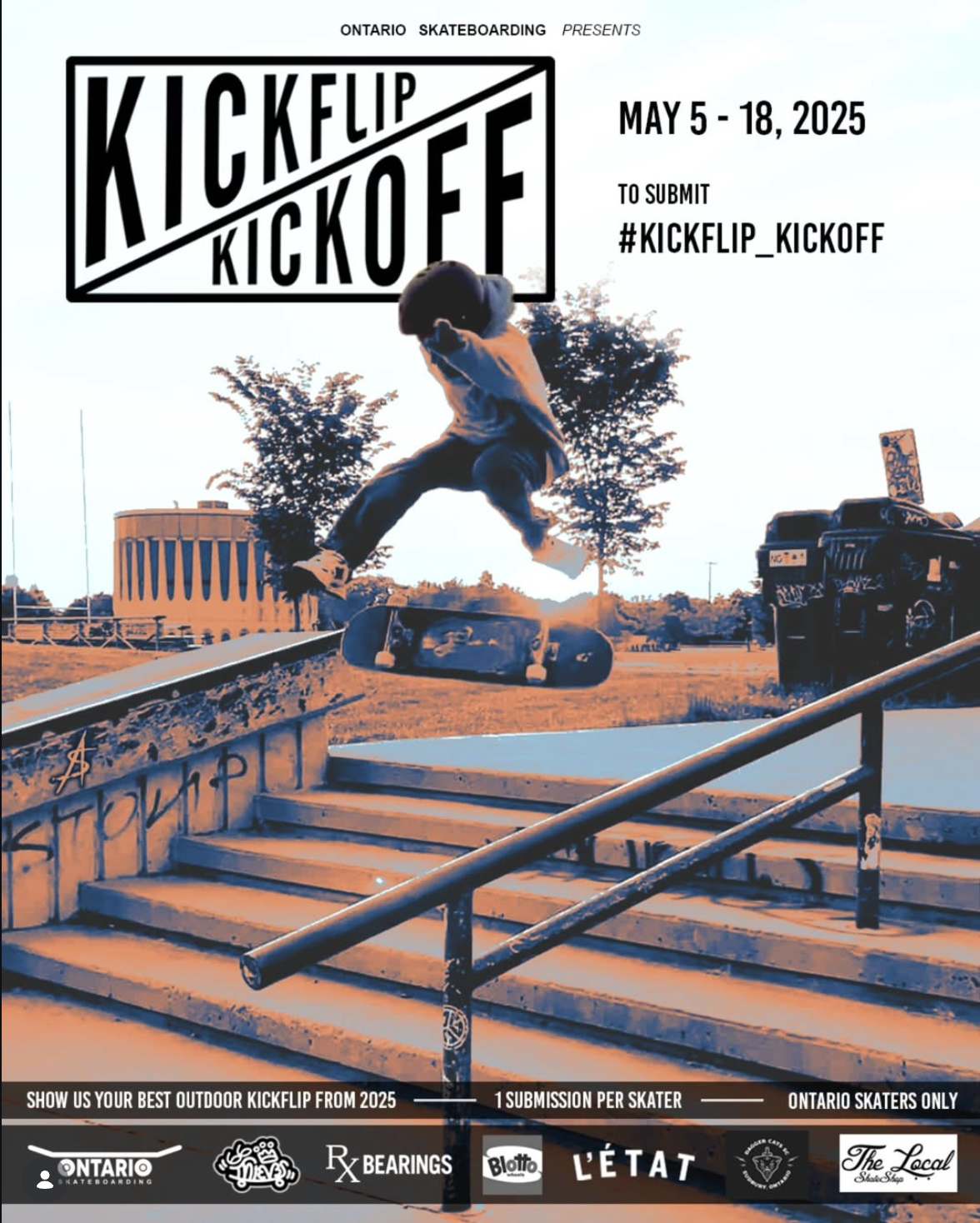
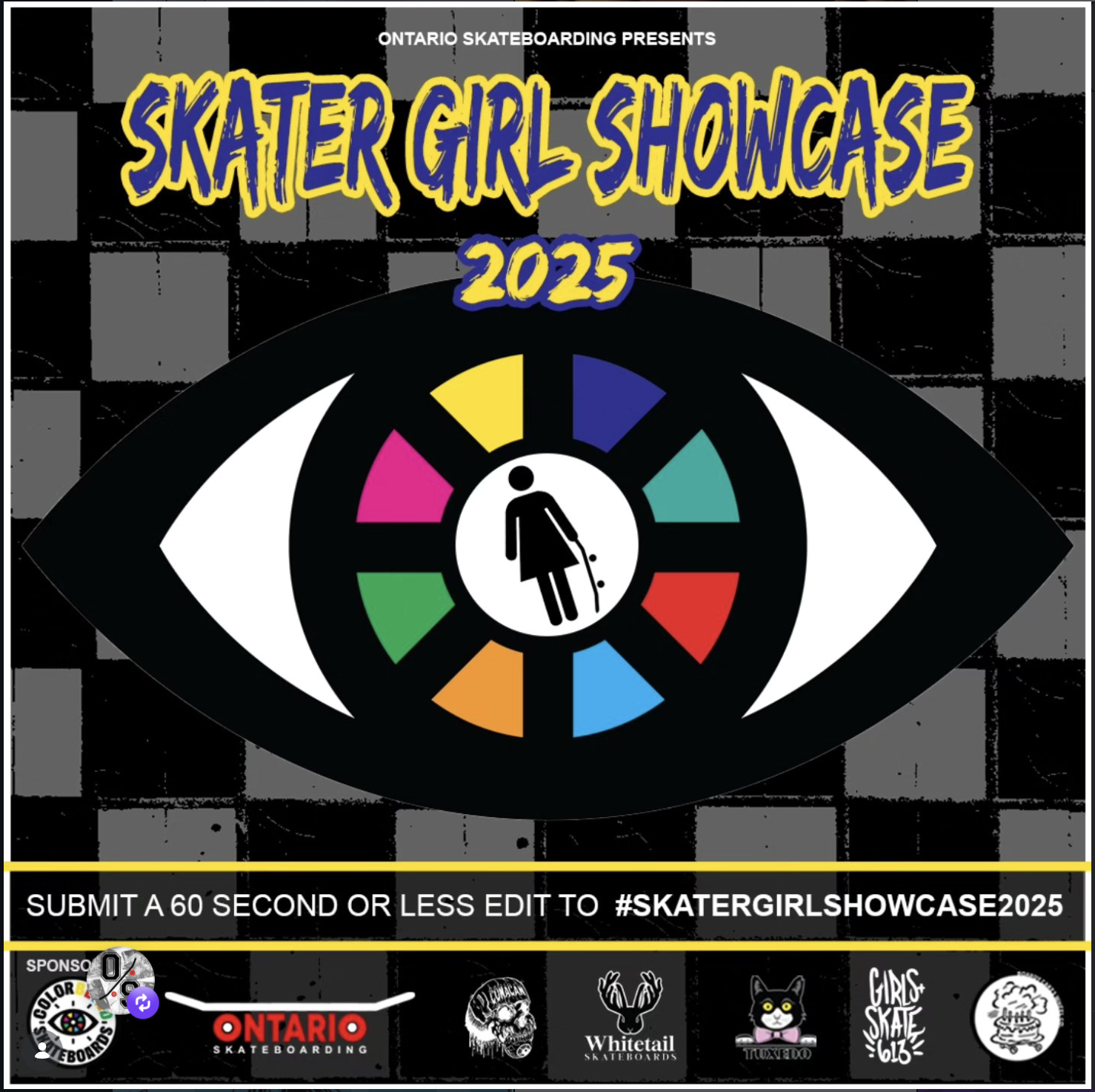
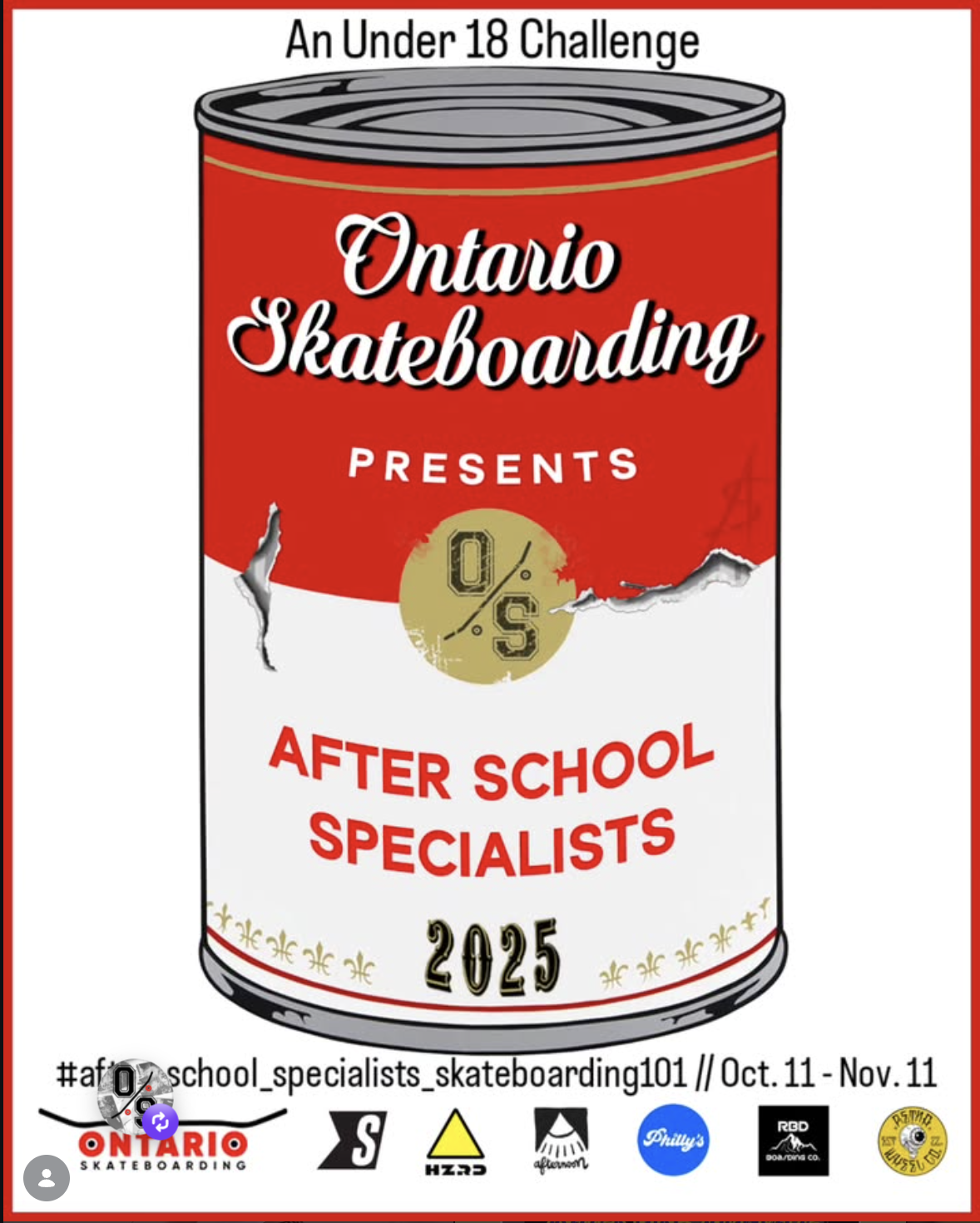
We’re building some community support committees for skater supports for things like addiction and suicide prevention. We have people like Bluebird and Bright Side out of the Kitchener area that want to help develop it.
We also want to increase our presence at more events and host our first core event at Skateloft in November.
MP: Anything in works people should be hyped on?
OS: The Skateloft event will be sanctioned by Canada Skateboard and have a lot to offer. The idea is to create a high intensity format that pushes everyone to the limit of clutch performance. It’s going to be savage. Keep an eye out for announcements in the summer. There should be some big surprises around that one that should create a good buzz just in time for the indoor season.
MP: With four-plus years under your belt now, how does this season hit differently from the earlier ones?
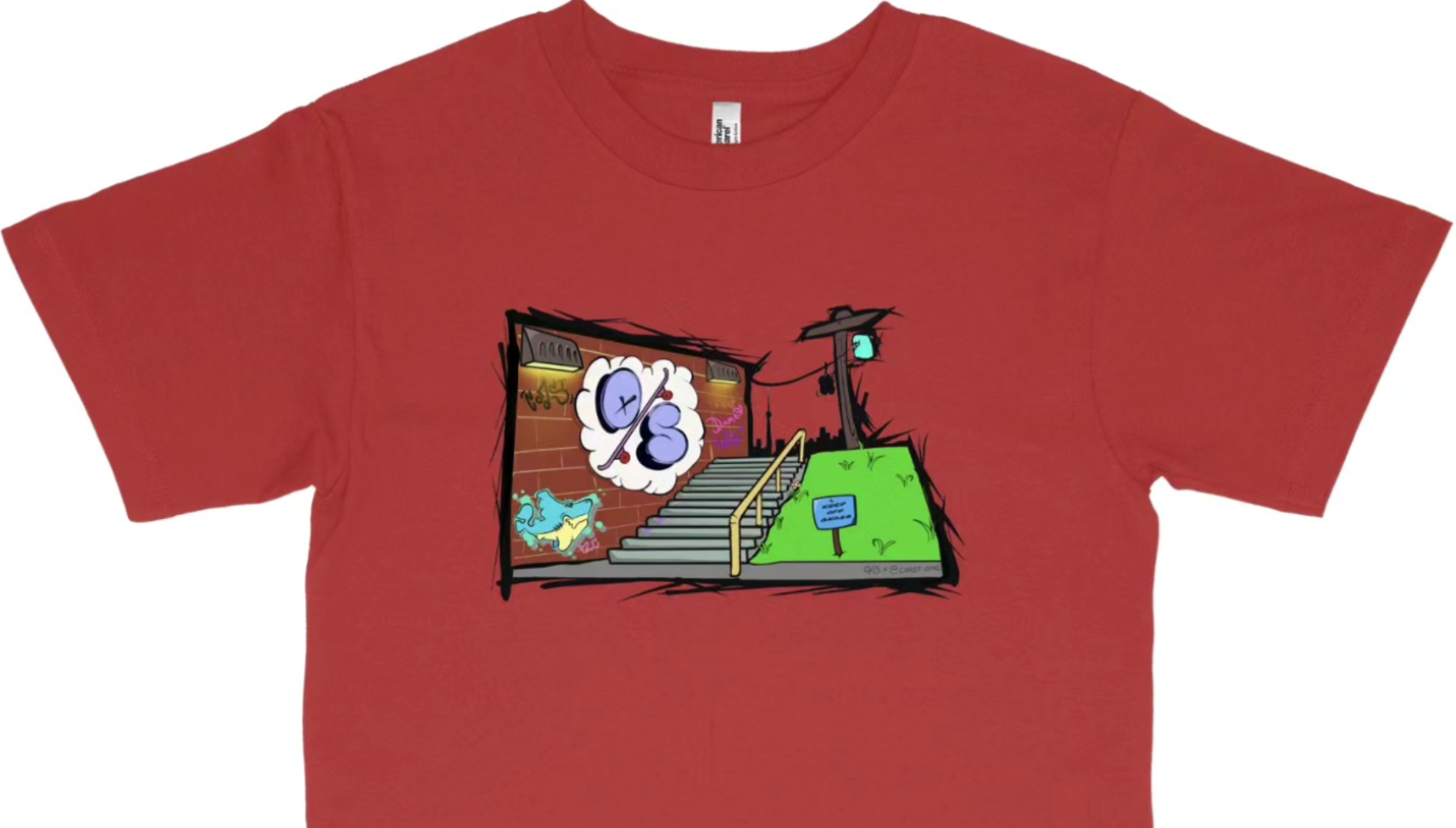
OS: We’ve got the rhythm now, so we just need to keep building towards the future and continue to deliver. We’re less of a project now and running more like a company. Our merch designs are dope and relevant. Our efforts are coordinated and we are coming at the community with concerted effort to make things better. It’s going to take time, but anything worth doing does.
MP: When the 2026 season’s done, what would make you look back and say, “Yeah, skating in Ontario was better because of that”?
OS: We have so many great people in this community. I really do believe that we can make a community led program here. Not every province has that. Ontario people are hardcore humans. We don’t let up and because there are so many local pockets of the community from east to west to north to south that all put in the work, we will push this thing to where it needs to go. We aren’t afraid of a little hustle. We just need a little more unity in the community to get there.
Long Game
MP: Five years down the road, what do you want Ontario skateboarding to look like?
OS: An absolute beast in the scene running one of a kind events for Ontario skaters. An archive of the journey of skateboarding in Ontario. Leading the charge for indoor training spots with the greatest merch in the streets.
MP: What do you hope kids coming up have easier than you did?
OS: The kids are connected to the culture early in their lives. There’s such great access to spots and parks these days. That just wasn’t a thing in small town Ontario in the 90s and early 2000s. They get the chance to skate next to local legends and create their own style of skateboarding in a supportive and inclusive environment. All they need to focus on is skating.
MP: And what do you never want Ontario skateboarding to turn into—no matter how big it gets?
OS: West 49.
MP: Any shout outs you’d like to make?
OS: All the brands, shops, parks, regional associations, skaters, filmers, zines, park builders, distributors, organizers, punkers, rockers, hiphoppers, graffiti artists, fine artists, enthusiasts, animators, cartoonists that are making killer content from Ontario.
The Ontario Skateboarding Board of Directors
Executive Director: Mike T-Shirt
Digital Media: Alex Sauret
Art Consult: Troy Geoghegan
Women’s Chair: Sasha Senior
Indigenous Chair: Will Mackie
Competitive Chair: Kevin Page
Advocacy Chair: Scott Loyst
